

Hello, my Xamarin friends!
Today, I am here with another new post in which I am going to tell you how to customize the Slider Lock. So, let's start.
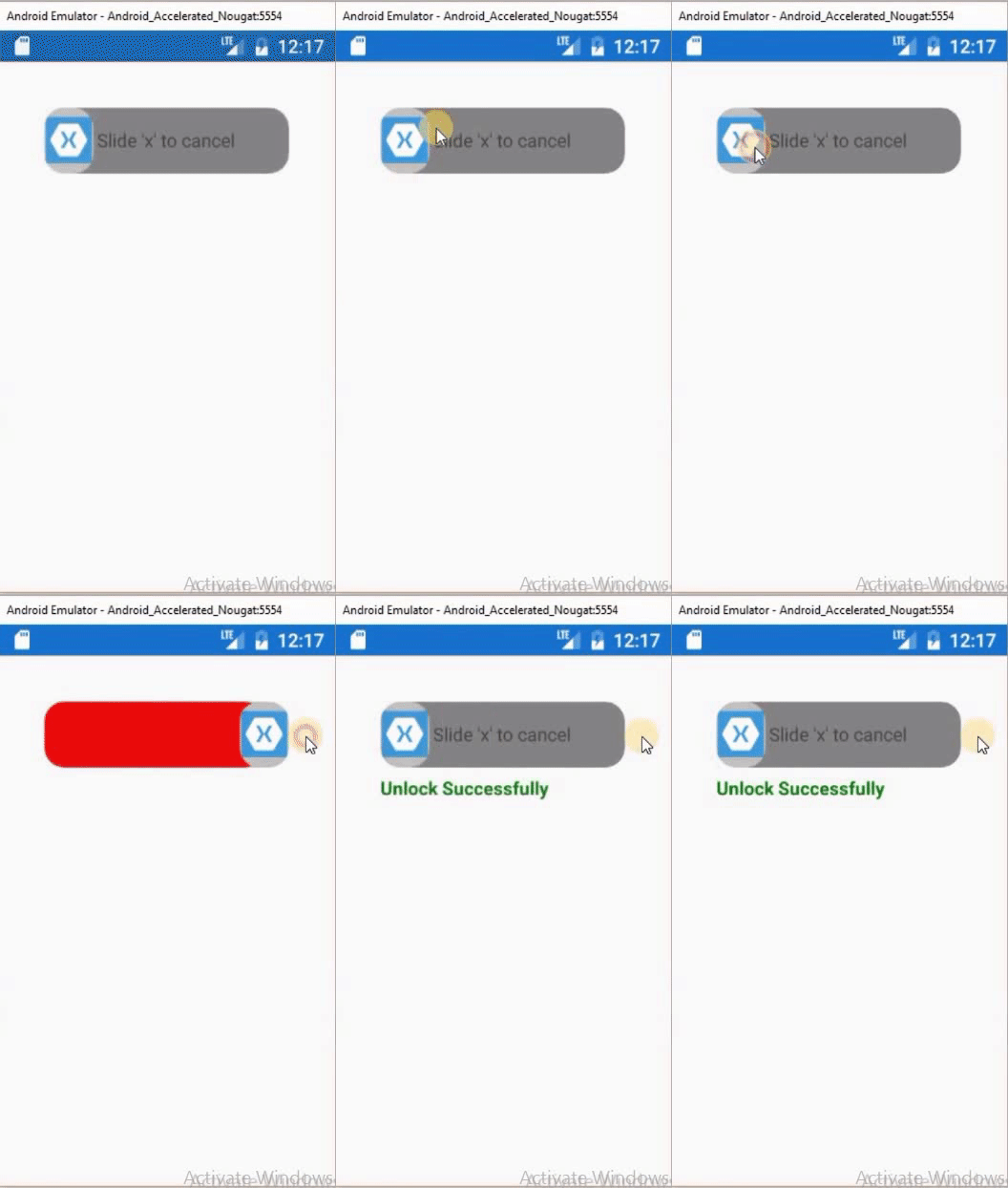
So, we will first create a class whose name "SlideToActView" and then we will write a code in "C #".
- namespace XamarinControlsApp.SliderLock
- {
- public class SlideToActView : AbsoluteLayout
- {
- public static readonly BindableProperty ThumbProperty =
- BindableProperty.Create(
- nameof(Thumb), typeof(View), typeof(SlideToActView),
- defaultValue: default(View));
- public View Thumb
- {
- get { return (View)GetValue(ThumbProperty); }
- set { SetValue(ThumbProperty, value); }
- }
- public static readonly BindableProperty TrackBarProperty =
- BindableProperty.Create(
- nameof(TrackBar),
- typeof(View),
- typeof(SlideToActView),
- defaultValue: default(View));
- public View TrackBar
- {
- get { return (View)GetValue(TrackBarProperty); }
- set { SetValue(TrackBarProperty, value); }
- }
- public static readonly BindableProperty FillBarProperty =
- BindableProperty.Create(
- nameof(FillBar), typeof(View), typeof(SlideToActView),
- defaultValue: default(View));
- public View FillBar
- {
- get { return (View)GetValue(FillBarProperty); }
- set { SetValue(FillBarProperty, value); }
- }
- private PanGestureRecognizer _panGesture = new PanGestureRecognizer();
- private View _gestureListener;
- public SlideToActView()
- {
- _panGesture.PanUpdated += OnPanGestureUpdated;
- SizeChanged += OnSizeChanged;
- _gestureListener = new ContentView { BackgroundColor = Color.White, Opacity = 0.05 };
- _gestureListener.GestureRecognizers.Add(_panGesture);
- }
- public event EventHandler SlideCompleted;
- private const double _fadeEffect = 0.5;
- private const uint _animLength = 50;
- async void OnPanGestureUpdated(object sender, PanUpdatedEventArgs e)
- {
- if (Thumb == null || TrackBar == null || FillBar == null)
- return;
- switch (e.StatusType)
- {
- case GestureStatus.Started:
- await TrackBar.FadeTo(_fadeEffect, _animLength);
- break;
- case GestureStatus.Running:
- // Translate and ensure we don't pan beyond the wrapped user interface element bounds.
- var x = Math.Max(0, e.TotalX);
- if (x > (Width - Thumb.Width))
- x = (Width - Thumb.Width);
- //Uncomment this if you want only forward dragging.
- //if (e.TotalX < Thumb.TranslationX)
- // return;
- Thumb.TranslationX = x;
- SetLayoutBounds(FillBar, new Rectangle(0, 0, x + Thumb.Width / 2, this.Height));
- break;
- case GestureStatus.Completed:
- var posX = Thumb.TranslationX;
- SetLayoutBounds(FillBar, new Rectangle(0, 0, 0, this.Height));
- // Reset translation applied during the pan
- await Task.WhenAll(new Task[]{
- TrackBar.FadeTo(1, _animLength),
- Thumb.TranslateTo(0, 0, _animLength * 2, Easing.CubicIn),
- });
- if (posX >= (Width - Thumb.Width - 10/* keep some margin for error*/))
- SlideCompleted?.Invoke(this, EventArgs.Empty);
- break;
- }
- }
- void OnSizeChanged(object sender, EventArgs e)
- {
- if (Width == 0 || Height == 0)
- return;
- if (Thumb == null || TrackBar == null || FillBar == null)
- return;
- Children.Clear();
- SetLayoutFlags(TrackBar, AbsoluteLayoutFlags.SizeProportional);
- SetLayoutBounds(TrackBar, new Rectangle(0, 0, 1, 1));
- Children.Add(TrackBar);
- SetLayoutFlags(FillBar, AbsoluteLayoutFlags.None);
- SetLayoutBounds(FillBar, new Rectangle(0, 0, 0, this.Height));
- Children.Add(FillBar);
- SetLayoutFlags(Thumb, AbsoluteLayoutFlags.None);
- SetLayoutBounds(Thumb, new Rectangle(0, 0, this.Width / 5, this.Height));
- Children.Add(Thumb);
- SetLayoutFlags(_gestureListener, AbsoluteLayoutFlags.SizeProportional);
- SetLayoutBounds(_gestureListener, new Rectangle(0, 0, 1, 1));
- Children.Add(_gestureListener);
- }
- }
- }
Please make sure to add view reference....
xmlns:local="clr-namespace:XamarinControlsApp.SliderLock"
Then, write the XAML code in main page.
- <?xml version="1.0" encoding="utf-8" ?>
- <ContentPage xmlns="http://xamarin.com/schemas/2014/forms"
- xmlns:x="http://schemas.microsoft.com/winfx/2009/xaml"
- xmlns:local1="clr-namespace:XamarinControlsApp"
- x:Class="XamarinControlsApp.MainPage"
- xmlns:local="clr-namespace:XamarinControlsApp.SliderLock"
- Title="Slider Lock">
- <StackLayout Margin="35">
- <local:SlideToActView HeightRequest="50"
- SlideCompleted="Handle_SlideCompleted">
- <local:SlideToActView.Thumb>
- <Frame CornerRadius="15"
- HasShadow="false"
- BackgroundColor="Silver"
- Padding="0">
- <Image Source="icon.png"
- HorizontalOptions="Center"
- VerticalOptions="Center"
- HeightRequest="35"
- WidthRequest="35" />
- </Frame>
- </local:SlideToActView.Thumb>
- <local:SlideToActView.TrackBar>
- <Frame CornerRadius="15"
- HasShadow="false"
- BackgroundColor="Gray"
- Padding="0">
- <Label Text="Sliding to Unlock"
- HorizontalOptions="CenterAndExpand"
- VerticalOptions="CenterAndExpand" />
- </Frame>
- </local:SlideToActView.TrackBar>
- <local:SlideToActView.FillBar>
- <Frame CornerRadius="15"
- HasShadow="false"
- BackgroundColor="Green"
- Padding="0" />
- </local:SlideToActView.FillBar>
- </local:SlideToActView>
- <Label x:Name="MessageLbl"
- FontAttributes="Bold"
- TextColor="Green" />
- </StackLayout>
- </ContentPage>
- public async void Handle_SlideCompleted(object sender, System.EventArgs e)
- {
- MessageLbl.Text = "Unlock Successfully!!";
- await Navigation.PushAsync(new NextPage());
- }
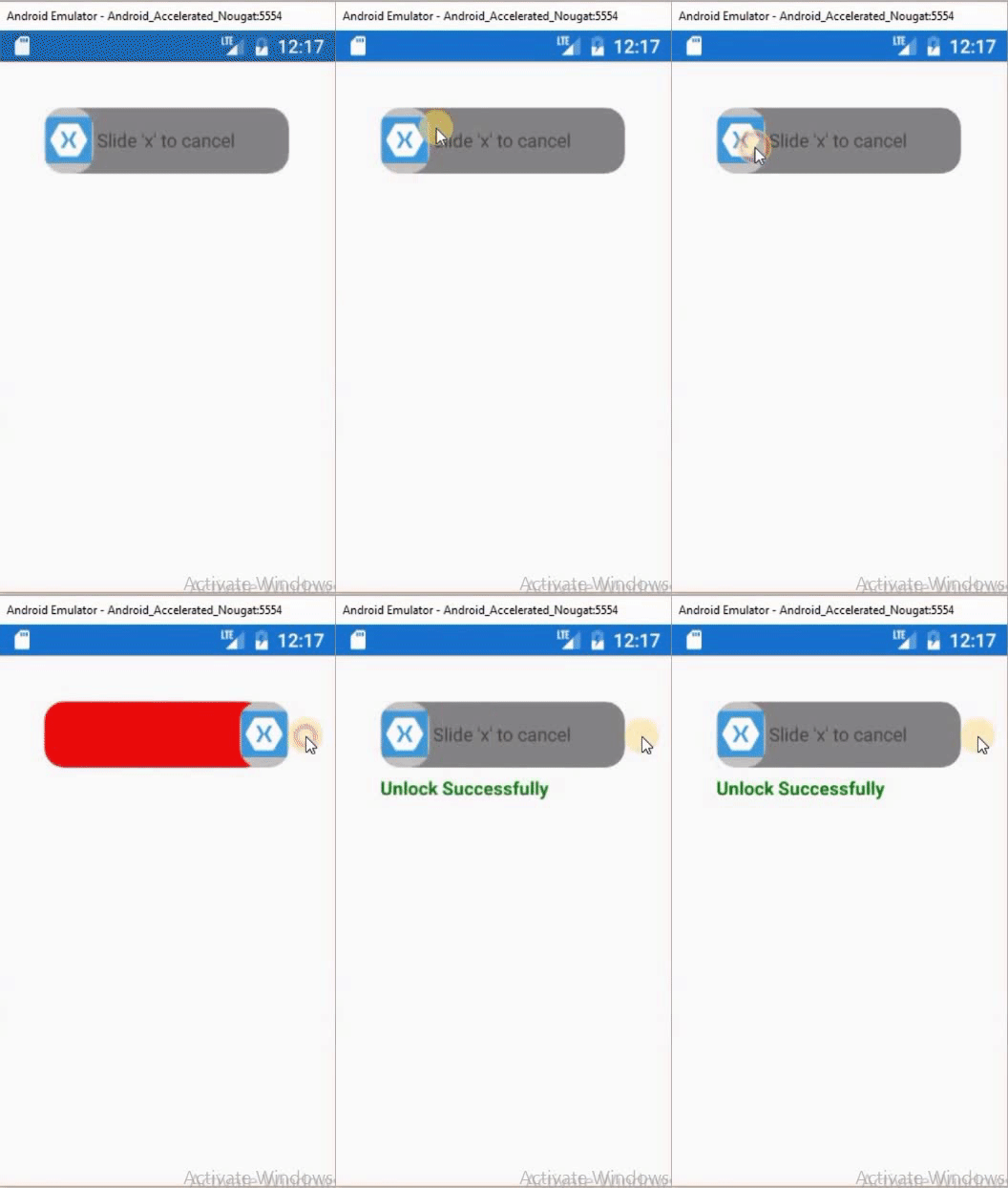
You should have your Slider Lock working!! If you want to watch a related video, click here Custom Slider Lock.
Join the conversation! Your thoughts help the community grow.