

SharePoint Framework is the new development model in which a lot of work has been going on since it went to General Availability on Feb. 23, 2017. It is a page and Web part model, which provides full support for client-side SharePoint development, easy integration with SharePoint data and support for an open source tooling. With SharePoint Framework, you can use modern Web technologies and tools in your preferred development environment to build productive experiences and apps in SharePoint.
In a previous article, we saw how to set up the development environment for SharePoint Framework. We also saw the basic Hello World Webpart creation, how to retrieve and display the list items, using SharePoint Framework. We also saw how to provision SharePoint List with custom Site Columns and Content Type here. In this article, we will see how to upgrade the previous solution, which was used to deploy a list so that we can deploy a second list along with the same solution.
Upgrade the solution
Once we have deployed the solution, if we make some changes at a later point, upgrade actions are available. Deploying without an upgrade will install a fresh copy of the solution. To retain the existing data, we will go with the upgrade option. However, to do the upgrade, we should add a new element file say elementsV2.xml.
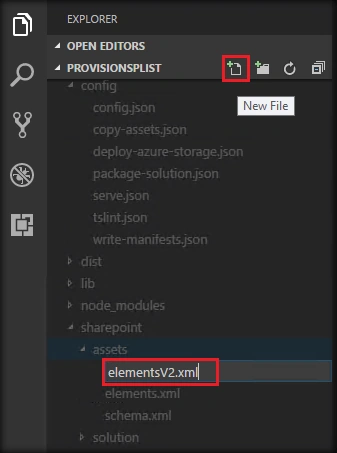
Upgrade the solution and add a new list
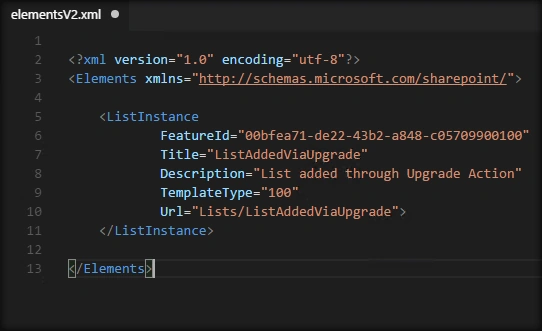
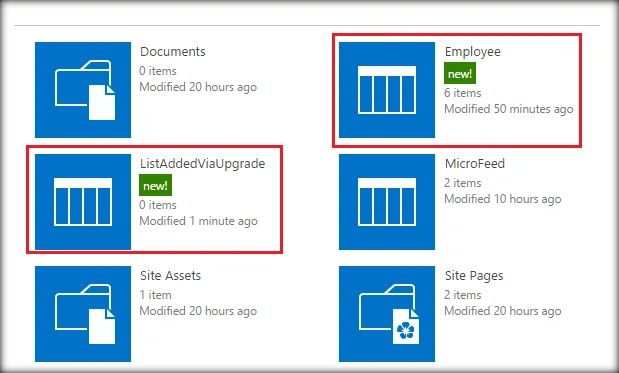
In our case, we are trying to add a new list along with the previously deployed solution. In the new elements file, we will specify the list instance declaration for a custom list.
- <?xml version="1.0" encoding="utf-8"?>
- <Elements xmlns="http://schemas.microsoft.com/sharepoint/">
- <ListInstance FeatureId="00bfea71-de22-43b2-a848-c05709900100" Title="ListAddedViaUpgrade" Description="List added through Upgrade Action" TemplateType="100" Url="Lists/ListAddedViaUpgrade"> </ListInstance>
- </Elements>
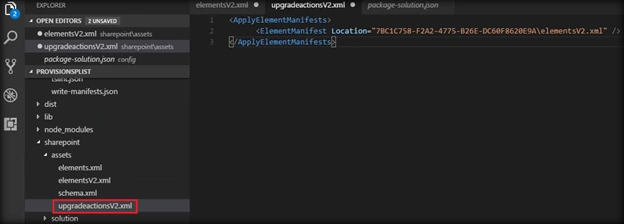
We will also add an upgrade action, which will contain the information about the newly added elements.xml file.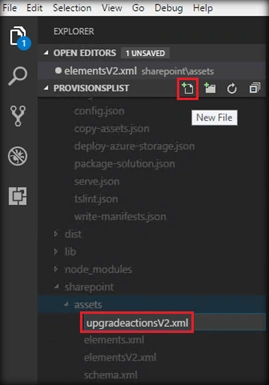
- <ApplyElementManifests>
- <ElementManifest Location="7BC1C758-F2A2-4775-B26E-DC60F8620E9A\elementsV2.xml" />
- </ApplyElementManifests>
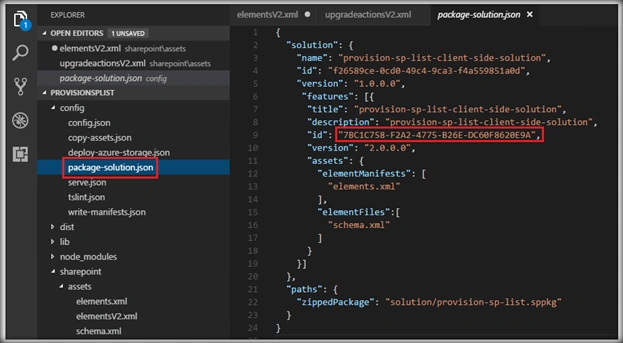
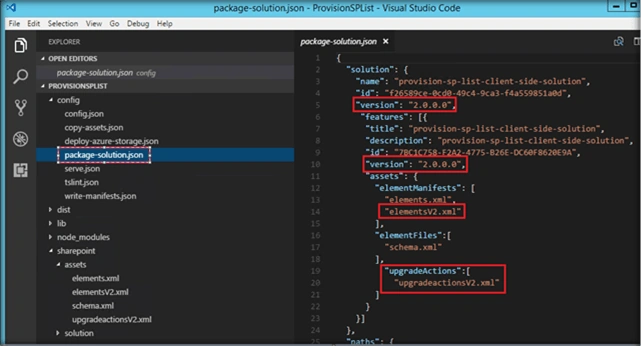
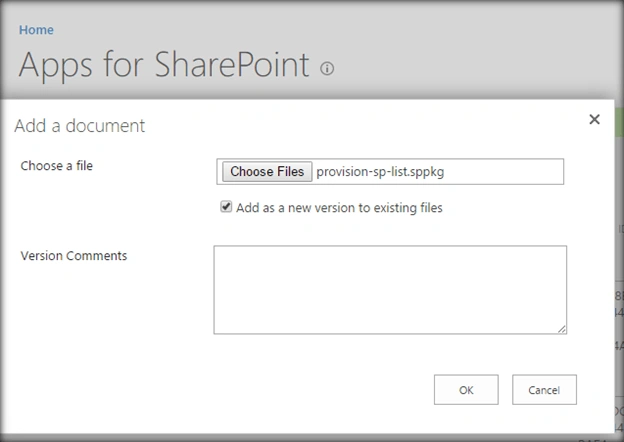
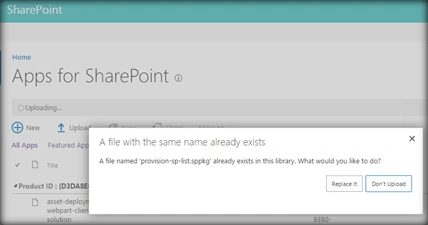
As the last step, we have to update the package-solution.json file by adding elementsV2.xml to the elementsmanfiest tag and we will also add the upgrade action's file reference.

Join the conversation! Your thoughts help the community grow.