

Read Emotions API part one.
Introduction
Android is one of the most popular operating systems for mobile. In this article, I will show you how to identify emotions with the help of Microsoft Emotions API.
Requirements
- Android Studio
- Little knowledge of XML and Java.
- Android Emulator (or) Android mobile
- Stable internet connection
Steps to be followed
Carefully follow these steps to use Emotions API in Android application using Android Studio. I've included the source code below.
Step 1
Go to activity_main.xml and click the text bottom. This XML file contains the designing code for the Android app. Into the activity_main.xml file, copy and paste the below code.
Activity_main.xml code
- <RelativeLayout xmlns:android="http://schemas.android.com/apk/res/android"
- xmlns:tools="http://schemas.android.com/tools" android:layout_width="match_parent"
- android:layout_height="match_parent" android:paddingLeft="@dimen/activity_horizontal_margin"
- android:paddingRight="@dimen/activity_horizontal_margin"
- android:paddingTop="@dimen/activity_vertical_margin"
- android:paddingBottom="@dimen/activity_vertical_margin" tools:context=".MainActivity">
- <LinearLayout
- android:orientation="vertical"
- android:layout_width="fill_parent"
- android:layout_height="fill_parent"
- android:weightSum="1">
- <Button
- android:layout_width="wrap_content"
- android:layout_height="wrap_content"
- android:text="Recognize Image"
- android:id="@+id/button_recognize"
- android:layout_gravity="center_horizontal"
- android:onClick="activityRecognize" />
- <TextView
- android:layout_width="wrap_content"
- android:layout_height="wrap_content"
- android:layout_marginTop="20dp"
- android:text="Microsoft will receive the images you upload and may use them to improve Emotion API and related services. By submitting an image, you confirm that you have consent from everyone in it."/>
- </LinearLayout>
- </RelativeLayout>
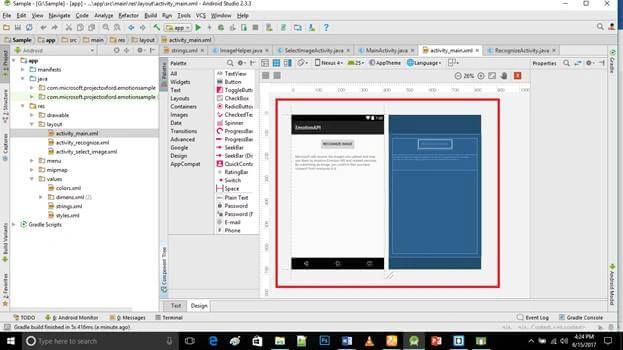
Create new activity_recognize.xml file (File ⇒ New ⇒Activity⇒Empty_activity).
Go to activity_recognize.xml and click the text bottom. This XML file contains the designing code for the Android app. In activity_recognize.xml, copy and paste the below code.
activity_recognize.xml code
- <RelativeLayout xmlns:android="http://schemas.android.com/apk/res/android"
- xmlns:tools="http://schemas.android.com/tools" android:layout_width="match_parent"
- android:layout_height="match_parent" android:paddingLeft="@dimen/activity_horizontal_margin"
- android:paddingRight="@dimen/activity_horizontal_margin"
- android:paddingTop="@dimen/activity_vertical_margin"
- android:paddingBottom="@dimen/activity_vertical_margin"
- tools:context="ganeshannt.emotionapi.RecognizeActivity">
- <LinearLayout
- android:orientation="vertical"
- android:layout_width="fill_parent"
- android:layout_height="fill_parent"
- android:weightSum="1">
- <TextView
- android:layout_width="wrap_content"
- android:layout_height="wrap_content"
- android:layout_margin="4dp"
- android:text="Select an image to analyze"/>
- <LinearLayout
- android:orientation="horizontal"
- android:layout_width="fill_parent"
- android:layout_height="wrap_content">
- <Button
- android:layout_width="wrap_content"
- android:layout_height="wrap_content"
- android:text="Select Image"
- android:id="@+id/buttonSelectImage"
- android:onClick="selectImage"/>
- <ImageView
- android:id="@+id/selectedImage"
- android:layout_width="200dp"
- android:layout_height="200dp"
- android:layout_toRightOf="@+id/image_control"
- android:layout_toEndOf="@+id/image_control"
- android:background="#E0E0E0" />
- </LinearLayout>
- <LinearLayout
- android:orientation="horizontal"
- android:layout_width="match_parent"
- android:layout_height="wrap_content"
- android:layout_gravity="right"
- android:layout_weight="1.03">
- <EditText
- android:layout_width="wrap_content"
- android:layout_height="match_parent"
- android:inputType="textMultiLine"
- android:ems="10"
- android:id="@+id/editTextResult"
- android:layout_weight="1" />
- </LinearLayout>
- </LinearLayout>
- </RelativeLayout>
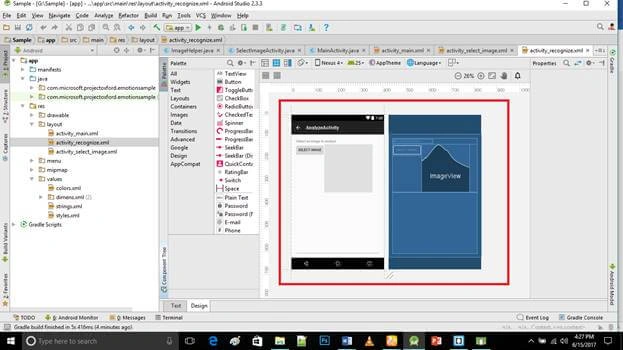
Go to activity_select_image.xml and click the text bottom. Here, copy and paste the below code.
activity_select_image.xml code
- <LinearLayout xmlns:android="http://schemas.android.com/apk/res/android"
- xmlns:tools="http://schemas.android.com/tools"
- android:layout_width="match_parent"
- android:layout_height="match_parent"
- android:paddingLeft="@dimen/activity_horizontal_margin"
- android:paddingRight="@dimen/activity_horizontal_margin"
- android:paddingTop="@dimen/activity_vertical_margin"
- android:paddingBottom="@dimen/activity_vertical_margin"
- android:baselineAligned="false"
- android:orientation="vertical"
- tools:context="ganeshannt.emotionapi.helper.SelectImageActivity">
- <RelativeLayout android:layout_width="match_parent"
- android:layout_height="match_parent"
- android:layout_weight="2">
- <TextView
- android:id="@+id/info"
- android:layout_width="wrap_content"
- android:layout_height="wrap_content"
- android:layout_centerHorizontal="true"
- android:layout_above="@+id/button_take_a_photo"
- android:layout_gravity="center" />
- <Button
- android:id="@+id/button_take_a_photo"
- android:layout_width="match_parent"
- android:layout_height="wrap_content"
- android:text="@string/take_photo"
- android:layout_centerHorizontal="true"
- android:layout_alignParentBottom="true"
- android:onClick="takePhoto"
- style="@style/ButtonStyle" />
- </RelativeLayout>
- <RelativeLayout android:layout_width="match_parent"
- android:layout_height="match_parent"
- android:layout_weight="1">
- <Button
- android:id="@+id/button_select_a_photo_in_album"
- android:layout_width="match_parent"
- android:layout_height="wrap_content"
- android:text="@string/select_image_in_album"
- android:layout_centerHorizontal="true"
- android:layout_centerVertical="true"
- android:onClick="selectImageInAlbum"
- style="@style/ButtonStyle" />
- </RelativeLayout>
- </LinearLayout>
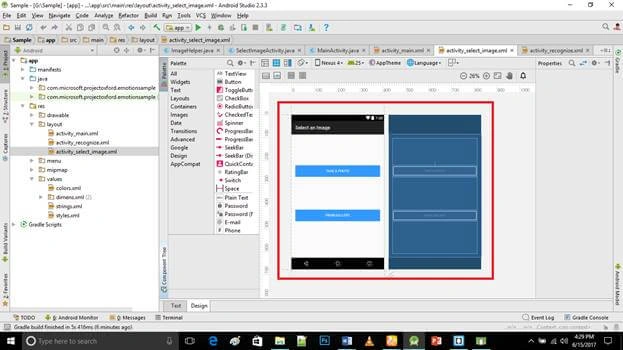
create three (name: helper)android package folder
(java->>new->>folder->>package folder).
Step 5
Into helper folder create file(class name:MainActivity, RecognizeActivity ) (File ⇒ New ⇒Java class).
Into the MainActivity.java copy and paste the below code.java programming is the backend language for Android. Do not replace your package name otherwise, the app will not run.
MainActivity.java code
- package ganeshannt.emotionapi;
- import android.app.AlertDialog;
- import android.content.Intent;
- import android.support.v7.app.ActionBarActivity;
- import android.os.Bundle;
- import android.view.Menu;
- import android.view.MenuItem;
- import android.view.View;
- public class MainActivity extends ActionBarActivity {
- @Override
- protected void onCreate(Bundle savedInstanceState) {
- super.onCreate(savedInstanceState);
- setContentView(R.layout.activity_main);
- if (getString(R.string.subscription_key).startsWith("Please")) {
- new AlertDialog.Builder(this)
- .setTitle(getString(R.string.add_subscription_key_tip_title))
- .setMessage(getString(R.string.add_subscription_key_tip))
- .setCancelable(false)
- .show();
- }
- }
- @Override
- public boolean onCreateOptionsMenu(Menu menu) {
- // Inflate the menu; this adds items to the action bar if it is present.
- getMenuInflater().inflate(R.menu.menu_main, menu);
- return true;
- }
- public void activityRecognize(View v) {
- Intent intent = new Intent(this, RecognizeActivity.class);
- startActivity(intent);
- }
- @Override
- public boolean onOptionsItemSelected(MenuItem item) {
- // Handle action bar item clicks here. The action bar will
- // automatically handle clicks on the Home/Up button, so long
- // as you specify a parent activity in AndroidManifest.xml.
- int id = item.getItemId();
- //noinspection SimplifiableIfStatement
- if (id == R.id.action_settings) {
- return true;
- }
- return super.onOptionsItemSelected(item);
- }
- }
Into the RecognizeActivity.java copy and paste the below code.java programming is the backend language for Android. Do not replace your package name, otherwise, the app will not run.
RecognizeActivity.java code
- package ganeshannt.emotionapi;
- import android.content.Intent;
- import android.graphics.Bitmap;
- import android.graphics.Canvas;
- import android.graphics.Color;
- import android.graphics.Paint;
- import android.graphics.drawable.BitmapDrawable;
- import android.net.Uri;
- import android.os.AsyncTask;
- import android.os.Bundle;
- import android.support.v7.app.ActionBarActivity;
- import android.util.Log;
- import android.view.Menu;
- import android.view.MenuItem;
- import android.view.View;
- import android.widget.Button;
- import android.widget.EditText;
- import android.widget.ImageView;
- import com.google.gson.Gson;
- import com.microsoft.projectoxford.emotion.EmotionServiceClient;
- import com.microsoft.projectoxford.emotion.EmotionServiceRestClient;
- import com.microsoft.projectoxford.emotion.contract.FaceRectangle;
- import com.microsoft.projectoxford.emotion.contract.RecognizeResult;
- import com.microsoft.projectoxford.emotion.rest.EmotionServiceException;
- import com.microsoft.projectoxford.emotionsample.helper.ImageHelper;
- import com.microsoft.projectoxford.face.FaceServiceRestClient;
- import com.microsoft.projectoxford.face.contract.Face;
- import java.io.ByteArrayInputStream;
- import java.io.ByteArrayOutputStream;
- import java.io.IOException;
- import java.util.List;
- public class RecognizeActivity extends ActionBarActivity {
- // Flag to indicate which task is to be performed.
- private static final int REQUEST_SELECT_IMAGE = 0;
- // The button to select an image
- private Button mButtonSelectImage;
- // The URI of the image selected to detect.
- private Uri mImageUri;
- // The image selected to detect.
- private Bitmap mBitmap;
- // The edit to show status and result.
- private EditText mEditText;
- private EmotionServiceClient client;
- @Override
- protected void onCreate(Bundle savedInstanceState) {
- super.onCreate(savedInstanceState);
- setContentView(R.layout.activity_recognize);
- if (client == null) {
- client = new EmotionServiceRestClient(getString(R.string.subscription_key));
- }
- mButtonSelectImage = (Button) findViewById(R.id.buttonSelectImage);
- mEditText = (EditText) findViewById(R.id.editTextResult);
- }
- @Override
- public boolean onCreateOptionsMenu(Menu menu) {
- // Inflate the menu; this adds items to the action bar if it is present.
- getMenuInflater().inflate(R.menu.menu_recognize, menu);
- return true;
- }
- @Override
- public boolean onOptionsItemSelected(MenuItem item) {
- // Handle action bar item clicks here. The action bar will
- // automatically handle clicks on the Home/Up button, so long
- // as you specify a parent activity in AndroidManifest.xml.
- int id = item.getItemId();
- //noinspection SimplifiableIfStatement
- if (id == R.id.action_settings) {
- return true;
- }
- return super.onOptionsItemSelected(item);
- }
- public void doRecognize() {
- mButtonSelectImage.setEnabled(false);
- // Do emotion detection using auto-detected faces.
- try {
- new doRequest(false).execute();
- } catch (Exception e) {
- mEditText.append("Error encountered. Exception is: " + e.toString());
- }
- String faceSubscriptionKey = getString(R.string.faceSubscription_key);
- if (faceSubscriptionKey.equalsIgnoreCase("Please_add_the_face_subscription_key_here")) {
- mEditText.append("\n\nThere is no face subscription key in res/values/strings.xml. Skip the sample for detecting emotions using face rectangles\n");
- } else {
- // Do emotion detection using face rectangles provided by Face API.
- try {
- new doRequest(true).execute();
- } catch (Exception e) {
- mEditText.append("Error encountered. Exception is: " + e.toString());
- }
- }
- }
- // Called when the "Select Image" button is clicked.
- public void selectImage(View view) {
- mEditText.setText("");
- Intent intent;
- intent = new Intent(RecognizeActivity.this, com.microsoft.projectoxford.emotionsample.helper.SelectImageActivity.class);
- startActivityForResult(intent, REQUEST_SELECT_IMAGE);
- }
- // Called when image selection is done.
- @Override
- protected void onActivityResult(int requestCode, int resultCode, Intent data) {
- Log.d("RecognizeActivity", "onActivityResult");
- switch (requestCode) {
- case REQUEST_SELECT_IMAGE:
- if (resultCode == RESULT_OK) {
- // If image is selected successfully, set the image URI and bitmap.
- mImageUri = data.getData();
- mBitmap = ImageHelper.loadSizeLimitedBitmapFromUri(
- mImageUri, getContentResolver());
- if (mBitmap != null) {
- // Show the image on screen.
- ImageView imageView = (ImageView) findViewById(R.id.selectedImage);
- imageView.setImageBitmap(mBitmap);
- // Add detection log.
- Log.d("RecognizeActivity", "Image: " + mImageUri + " resized to " + mBitmap.getWidth()
- + "x" + mBitmap.getHeight());
- doRecognize();
- }
- }
- break;
- default:
- break;
- }
- }
- private List<RecognizeResult> processWithAutoFaceDetection() throws EmotionServiceException, IOException {
- Log.d("emotion", "Start emotion detection with auto-face detection");
- Gson gson = new Gson();
- // Put the image into an input stream for detection.
- ByteArrayOutputStream output = new ByteArrayOutputStream();
- mBitmap.compress(Bitmap.CompressFormat.JPEG, 100, output);
- ByteArrayInputStream inputStream = new ByteArrayInputStream(output.toByteArray());
- long startTime = System.currentTimeMillis();
- // -----------------------------------------------------------------------
- // KEY SAMPLE CODE STARTS HERE
- // -----------------------------------------------------------------------
- List<RecognizeResult> result = null;
- //
- // Detect emotion by auto-detecting faces in the image.
- //
- result = this.client.recognizeImage(inputStream);
- String json = gson.toJson(result);
- Log.d("result", json);
- Log.d("emotion", String.format("Detection done. Elapsed time: %d ms", (System.currentTimeMillis() - startTime)));
- // -----------------------------------------------------------------------
- // KEY SAMPLE CODE ENDS HERE
- // -----------------------------------------------------------------------
- return result;
- }
- private List<RecognizeResult> processWithFaceRectangles() throws EmotionServiceException, com.microsoft.projectoxford.face.rest.ClientException, IOException {
- Log.d("emotion", "Do emotion detection with known face rectangles");
- Gson gson = new Gson();
- // Put the image into an input stream for detection.
- ByteArrayOutputStream output = new ByteArrayOutputStream();
- mBitmap.compress(Bitmap.CompressFormat.JPEG, 100, output);
- ByteArrayInputStream inputStream = new ByteArrayInputStream(output.toByteArray());
- long timeMark = System.currentTimeMillis();
- Log.d("emotion", "Start face detection using Face API");
- FaceRectangle[] faceRectangles = null;
- String faceSubscriptionKey = getString(R.string.faceSubscription_key);
- FaceServiceRestClient faceClient = new FaceServiceRestClient(faceSubscriptionKey);
- Face faces[] = faceClient.detect(inputStream, false, false, null);
- Log.d("emotion", String.format("Face detection is done. Elapsed time: %d ms", (System.currentTimeMillis() - timeMark)));
- if (faces != null) {
- faceRectangles = new FaceRectangle[faces.length];
- for (int i = 0; i < faceRectangles.length; i++) {
- // Face API and Emotion API have different FaceRectangle definition. Do the conversion.
- com.microsoft.projectoxford.face.contract.FaceRectangle rect = faces[i].faceRectangle;
- faceRectangles[i] = new com.microsoft.projectoxford.emotion.contract.FaceRectangle(rect.left, rect.top, rect.width, rect.height);
- }
- }
- List<RecognizeResult> result = null;
- if (faceRectangles != null) {
- inputStream.reset();
- timeMark = System.currentTimeMillis();
- Log.d("emotion", "Start emotion detection using Emotion API");
- // -----------------------------------------------------------------------
- // KEY SAMPLE CODE STARTS HERE
- // -----------------------------------------------------------------------
- result = this.client.recognizeImage(inputStream, faceRectangles);
- String json = gson.toJson(result);
- Log.d("result", json);
- // -----------------------------------------------------------------------
- // KEY SAMPLE CODE ENDS HERE
- // -----------------------------------------------------------------------
- Log.d("emotion", String.format("Emotion detection is done. Elapsed time: %d ms", (System.currentTimeMillis() - timeMark)));
- }
- return result;
- }
- private class doRequest extends AsyncTask<String, String, List<RecognizeResult>> {
- // Store error message
- private Exception e = null;
- private boolean useFaceRectangles = false;
- public doRequest(boolean useFaceRectangles) {
- this.useFaceRectangles = useFaceRectangles;
- }
- @Override
- protected List<RecognizeResult> doInBackground(String... args) {
- if (this.useFaceRectangles == false) {
- try {
- return processWithAutoFaceDetection();
- } catch (Exception e) {
- this.e = e; // Store error
- }
- } else {
- try {
- return processWithFaceRectangles();
- } catch (Exception e) {
- this.e = e; // Store error
- }
- }
- return null;
- }
- @Override
- protected void onPostExecute(List<RecognizeResult> result) {
- super.onPostExecute(result);
- // Display based on error existence
- if (this.useFaceRectangles == false) {
- mEditText.append("\n\nRecognizing emotions with auto-detected face rectangles...\n");
- } else {
- mEditText.append("\n\nRecognizing emotions with existing face rectangles from Face API...\n");
- }
- if (e != null) {
- mEditText.setText("Error: " + e.getMessage());
- this.e = null;
- } else {
- if (result.size() == 0) {
- mEditText.append("No emotion detected :(");
- } else {
- Integer count = 0;
- // Covert bitmap to a mutable bitmap by copying it
- Bitmap bitmapCopy = mBitmap.copy(Bitmap.Config.ARGB_8888, true);
- Canvas faceCanvas = new Canvas(bitmapCopy);
- faceCanvas.drawBitmap(mBitmap, 0, 0, null);
- Paint paint = new Paint(Paint.ANTI_ALIAS_FLAG);
- paint.setStyle(Paint.Style.STROKE);
- paint.setStrokeWidth(5);
- paint.setColor(Color.RED);
- for (RecognizeResult r : result) {
- mEditText.append(String.format("\nFace #%1$d \n", count));
- mEditText.append(String.format("\t anger: %1$.5f\n", r.scores.anger));
- mEditText.append(String.format("\t contempt: %1$.5f\n", r.scores.contempt));
- mEditText.append(String.format("\t disgust: %1$.5f\n", r.scores.disgust));
- mEditText.append(String.format("\t fear: %1$.5f\n", r.scores.fear));
- mEditText.append(String.format("\t happiness: %1$.5f\n", r.scores.happiness));
- mEditText.append(String.format("\t neutral: %1$.5f\n", r.scores.neutral));
- mEditText.append(String.format("\t sadness: %1$.5f\n", r.scores.sadness));
- mEditText.append(String.format("\t surprise: %1$.5f\n", r.scores.surprise));
- mEditText.append(String.format("\t face rectangle: %d, %d, %d, %d", r.faceRectangle.left, r.faceRectangle.top, r.faceRectangle.width, r.faceRectangle.height));
- faceCanvas.drawRect(r.faceRectangle.left,
- r.faceRectangle.top,
- r.faceRectangle.left + r.faceRectangle.width,
- r.faceRectangle.top + r.faceRectangle.height,
- paint);
- count++;
- }
- ImageView imageView = (ImageView) findViewById(R.id.selectedImage);
- imageView.setImageDrawable(new BitmapDrawable(getResources(), mBitmap));
- }
- mEditText.setSelection(0);
- }
- mButtonSelectImage.setEnabled(true);
- }
- }
- }
Step 7
As we need to make network requests, we need to add INTERNET permission in AndroidManifest.xml.Add the below code into the AndroidManifest.xml.
AndroidManifest.xml code
- <?xml version="1.0" encoding="utf-8"?>
- <manifest xmlns:android="http://schemas.android.com/apk/res/android"
- package="ganeshannt.emotionapi" >
- <uses-permission android:name="android.permission.INTERNET" />
- <uses-permission android:name="android.permission.ACCESS_NETWORK_STATE" />
- <uses-permission android:name="android.permission.READ_EXTERNAL_STORAGE" />
- <application
- android:allowBackup="true"
- android:icon="@mipmap/ic_launcher"
- android:label="@string/app_name"
- android:theme="@style/AppTheme" >
- <activity
- android:name="com.microsoft.projectoxford.emotionsample.MainActivity"
- android:label="@string/app_name" >
- <intent-filter>
- <action android:name="android.intent.action.MAIN" />
- <category android:name="android.intent.category.LAUNCHER" />
- </intent-filter>
- </activity>
- <activity
- android:name="com.microsoft.projectoxford.emotionsample.RecognizeActivity"
- android:label="@string/title_activity_analyze"
- android:parentActivityName="com.microsoft.projectoxford.emotionsample.MainActivity" >
- <meta-data
- android:name="android.support.PARENT_ACTIVITY"
- android:value="com.microsoft.projectoxford.emotionsample.MainActivity" />
- </activity>
- <activity
- android:name="com.microsoft.projectoxford.emotionsample.helper.SelectImageActivity"
- android:label="@string/select_an_image"
- android:screenOrientation="portrait" />
- </application>
- </manifest>
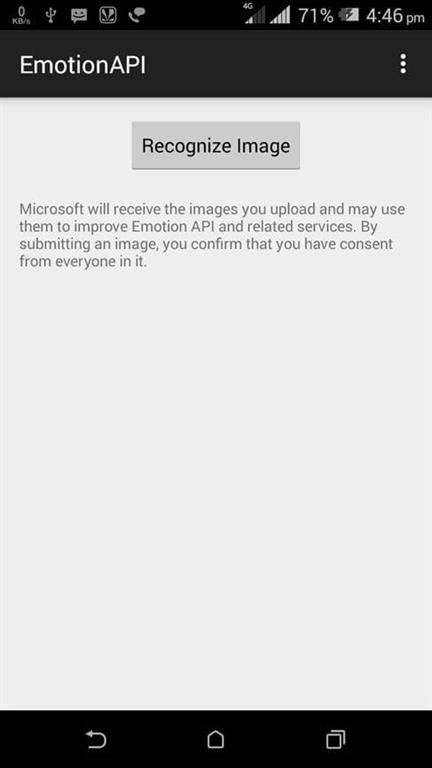
This is our user interface of the application. Click the make project option.
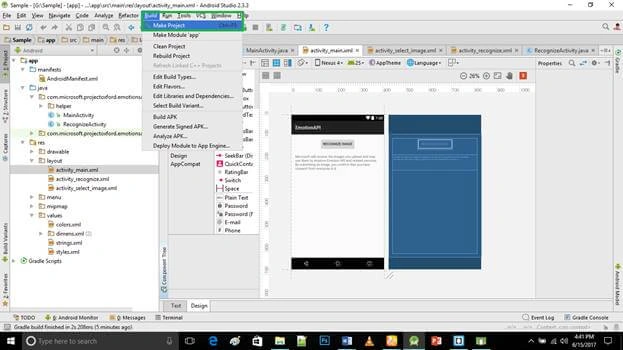 Step 9
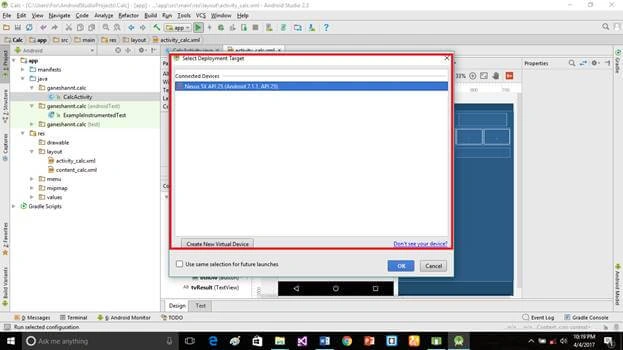
Run the application then choose the virtual machine then click ok.
 Deliverables
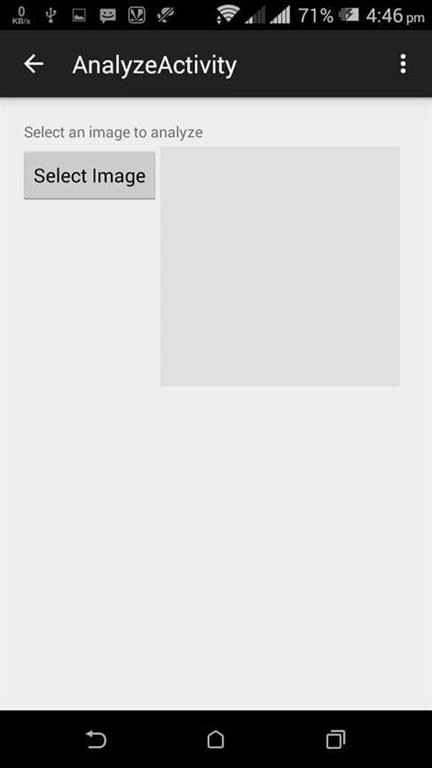
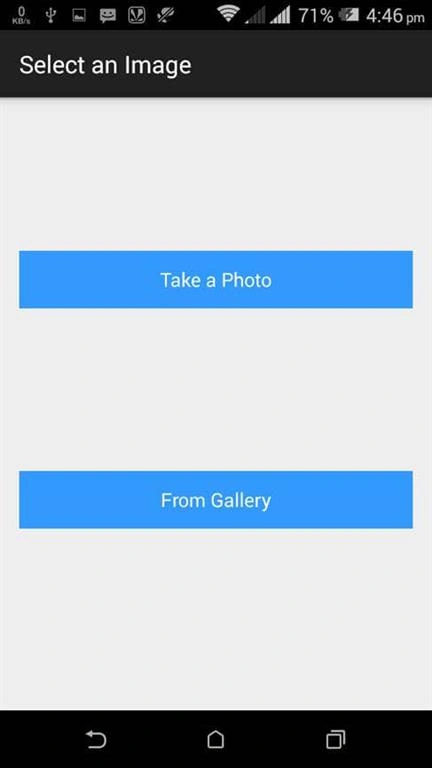
Here the emotion was successfully detected using emotion API created and executed in the Android app.
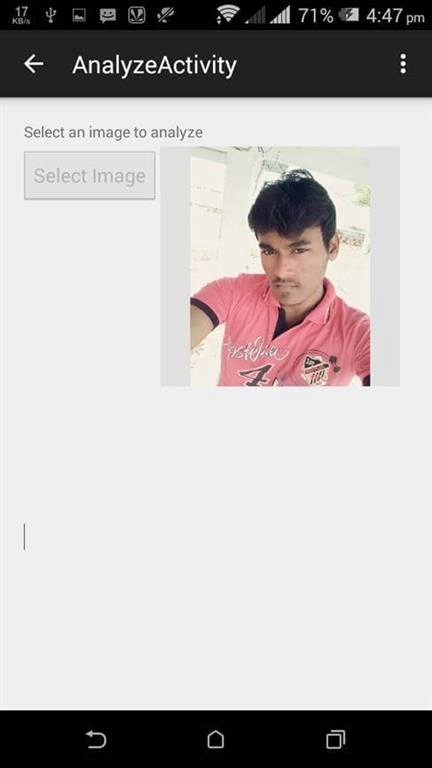
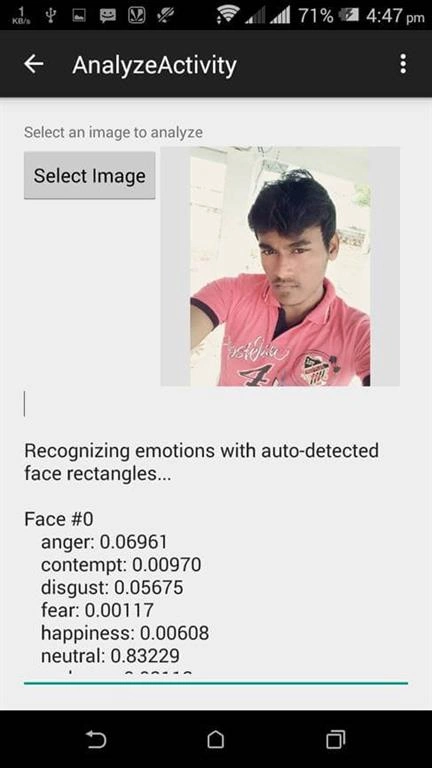 Don’t forget to like and follow me. If you have any doubts just comment below.
Miro FqPosted Oct 28, 2020, 5:27 AM
Hello Ganeshan could you update this project using the latest version of Azure Face API? Because Emotion API is not available anymore instead emotion detection should use Azure Face API now and I have trouble connecting this tutorial using AZure Face API.
Miro FqPosted Oct 20, 2020, 1:33 PM
I wonder whether is it possible to do a real time emotion detection when user open camera? I want this kind of output you show up here but I wish it can be done when user open camera and the emotion detector detects the user's emotion real time. Is it possible in android studio?
fahad raoPosted Jun 28, 2020, 2:03 PM
Hello bro where is the string resources file for subscription key and where is the dependency files
Olu SamuelPosted Aug 16, 2017, 8:08 PM
Thank you Ganeshan, My android studio is seeing the private EmotionServiceClient client in the RecognizeActivity.java as an error, please how do I resolve this