

Excel Services in SharePoint Server 2013 is enabled by creating an Excel Services Application service application in Central Administration. This article walks you through the steps of deploying Excel Services in your SharePoint Server 2013 farm.
Excel Services in SharePoint Server 2013 is a shared service that you can use to publish Excel 2013 workbooks on a SharePoint Server. The published workbooks can be managed and secured according to your organizational needs and shared among SharePoint Server 2013 users, who can render the workbooks in a browser. Excel Services was introduced in Office SharePoint Server 2007 and is available only in the Enterprise edition of SharePoint Server 2013. Excel Services is used primarily for business intelligence scenarios. Excel workbooks can be connected to external data sources, reports created, and then the workbook can be published to a SharePoint document library. When a user opens the workbook from the document library, it is rendered in the browser using Excel Services. The external data connection is maintained and the data is refreshed if necessary. This allows broad sharing of reports throughout an organization.
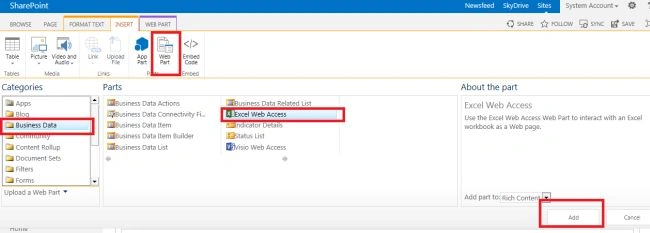
Excel Services consists of Excel Calculation Services, the Excel Web Access Web Part, and Excel Web Services for programmatic access. It supports sharing, securing, managing, and using Excel 2013 workbooks in a browser by providing the following:
- Global settings for managing workbooks, that include settings for security, load balancing, session management, memory utilization, workbook caches, and external data connections.
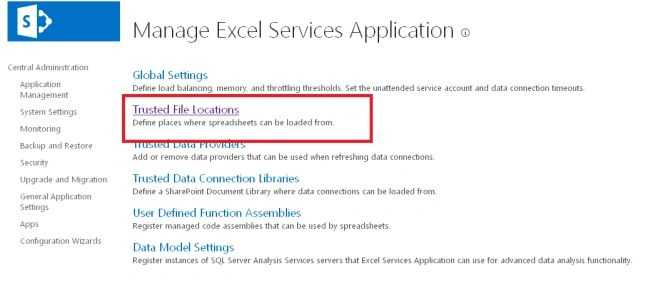
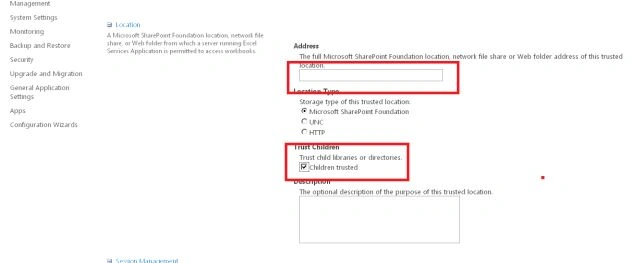
- Trusted file locations (that allow you to define which document libraries are trusted by Excel Services) together with session management, workbook size, calculation behavior, and external data settings of workbooks stored in those locations.
While users can interact with Excel workbooks in a browser through Excel Services, the workbooks cannot be edited in the browser by using Excel Services. Programmatic options are available. Looking at several specific scenarios can help you understand how best to take advantage of Excel Services:
- Sharing workbooks: Users can save Excel 2013 workbooks to a SharePoint Server document library to provide other users browser-based access to the server-calculated version of the workbook. When the workbook is accessed, Excel Services loads the workbook, refreshes the external data if it is necessary, calculates it if that is necessary, and sends the resulting output view back through the browser. A user can interact with Excel-based data by sorting, filtering, expanding, or collapsing PivotTables, and by passing in parameters. This provides the ability to perform analysis on published workbooks. A user does not have to have Excel 2013 installed to view the workbook. Users will always view the latest version of a workbook, and they can interact with it in a browser. Security permissions can be set to limit what access is provided for each user.
- Building business intelligence (BI) dashboards: Browser-based dashboards can be created using Excel and Excel Services together with the Excel Web Access Web Part. PerformancePoint Services can also use Excel Services workbooks as a data source.
- Reuse of logic encapsulated in Excel workbooks: in custom applications, besides a browser-based interface with the server, Excel Services provides a Web-service–based interface so that a published workbook can be accessed programmatically by any application that uses Web services. The Web service applications can change values, calculate the workbook, and retrieve some or the entire updated workbook by using that interface dependoning on what security permissions is set for the published workbook.
- Report Building: one of the most useful features of Excel Services is report building. By publishing data-connected workbooks to a SharePoint document library and making them available through Excel Services, you can make reports that you have created in Excel available to others in your organization. Instead of multiple users having separate copies of the workbooks on their computers, the workbooks can be created and changed by a trusted author in a central location that is trusted by Excel Services. The correct version of the worksheet is easier to find, share, and use from Excel, SharePoint Server, and other applications.
Start the Excel Calculation Services service
- On the Central Administration home page, in the System Settings section, click "Manage services on server."
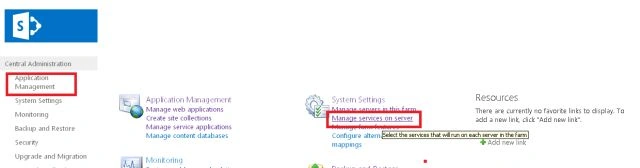
- To select the server where you want to start the service, above the Service list, click the Server drop-down list, and then click "Change Server" and choose the appropriate server.
- In the Service list, click "Start" next to "Excel Calculation Services".

- After the Excel Calculation Services service has been started, the next step is to create an Excel Services service application.
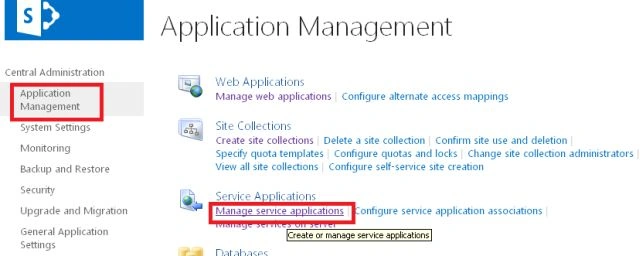
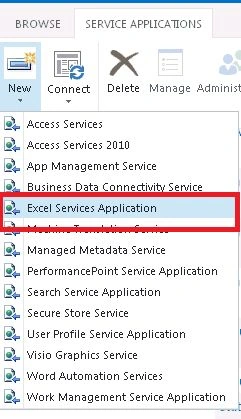
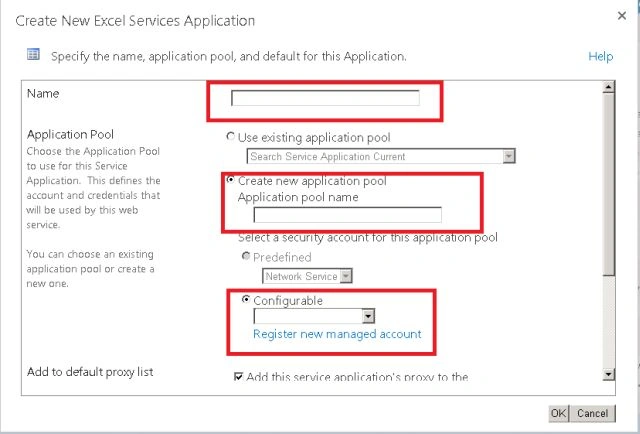


kalu singh raoPosted Jul 6, 2016, 1:51 AM
Nice...
Prasad BeherePosted Aug 12, 2015, 2:14 AM
Hello Destin - Thanks for the wonderful article. I have a requirement of refreshing excel report uploaded in Sharepoint. Do we have any APIs exposed to do so from C#? I basically I would like to refresh excel reports from SSIS process. Please guide. Thank you. Thank you.
Jean PaulPosted Jan 28, 2015, 2:53 PM
Thank You for the good article Destin. Are the cells editable using web part option "Typing and Formula Entry"?
Destin JoyPosted Jan 22, 2013, 11:33 PM
Thank you Adi:)
Adiseshu DasariPosted Jan 22, 2013, 9:39 AM
Hello Destin, Such a detailed article, great work :) Thanks, Adi