

Introduction
In this article we will see how to access a SQL Server database with the Entity Framework Code First Approach using data and later we will see how to create a procedure using the Fluent API.
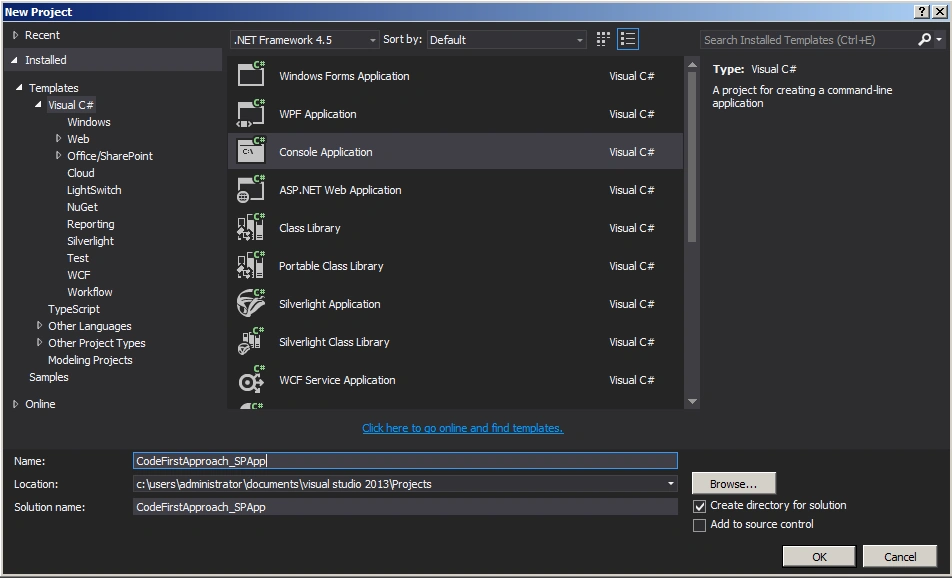
Step 1: Create console application
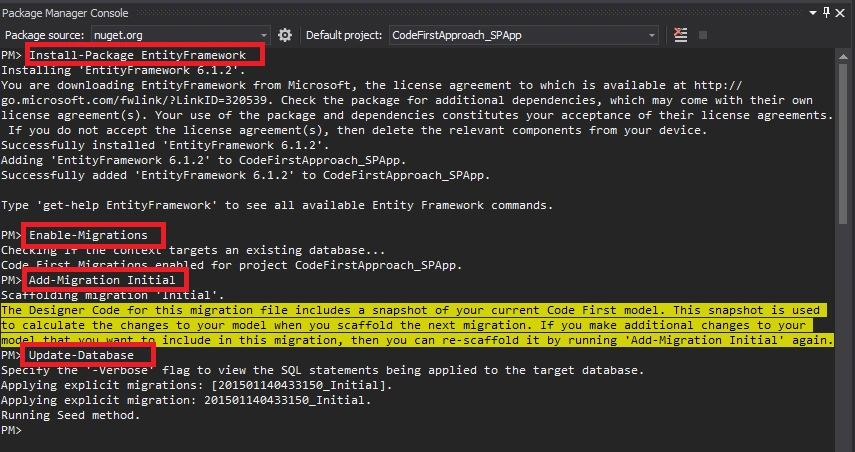
Migrations
Employee.cs
- using System;
- using System.Collections.Generic;
- using System.ComponentModel.DataAnnotations;
- using System.ComponentModel.DataAnnotations.Schema;
- using System.Linq;
- using System.Text;
- using System.Threading.Tasks;
- namespace CodeFirstApproach_SPApp
- {
- public class Employee
- {
- public Employee()
- {
- }
- [Key]
- [DatabaseGenerated(DatabaseGeneratedOption.Identity)]
- public int Id { get; set; }
- public string FirstName { get; set; }
- public string LastName { get; set; }
- }
- }
Employeecontext.cs
- using System;
- using System.Collections.Generic;
- using System.Data.Entity;
- using System.Linq;
- using System.Text;
- using System.Threading.Tasks;
- namespace CodeFirstApproach_SPApp
- {
- public class EmployeeContext : DbContext
- {
- public EmployeeContext()
- : base("EmployeeConn")
- {
- Database.SetInitializer<EmployeeContext>(new CreateDatabaseIfNotExists<EmployeeContext>());
- }
- public DbSet<Employee> Employees { get; set; }
- protected override void OnModelCreating(DbModelBuilder modelBuilder)
- {
- modelBuilder.Entity<Employee>()
- .MapToStoredProcedures();
- }
- }
- }
Web.config
- <connectionStrings>
- <add name="EmployeeConn"
- connectionString="Data Source=WIN-B4KJ8JI75VF;Initial Catalog=EmployeeDB;Integrated Security=true"
- providerName="System.Data.SqlClient"/>
- </connectionStrings>
Program.cs
- using System;
- using System.Collections.Generic;
- using System.Linq;
- using System.Text;
- using System.Threading.Tasks;
- namespace CodeFirstApproach_SPApp
- {
- class Program
- {
- static void Main(string[] args)
- {
- EmployeeContext empContext = new EmployeeContext();
- Employee emp = new Employee()
- {
- FirstName = "Haney",
- LastName = "Jow"
- };
- empContext.Employees.Add(emp);
- empContext.SaveChanges();
- Console.WriteLine("Inserted");
- Console.ReadKey();
- }
- }
- }
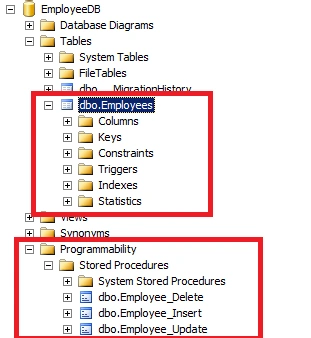
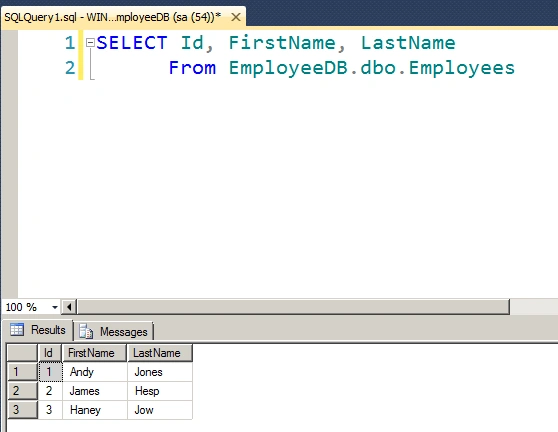
The following shows the output of the application:
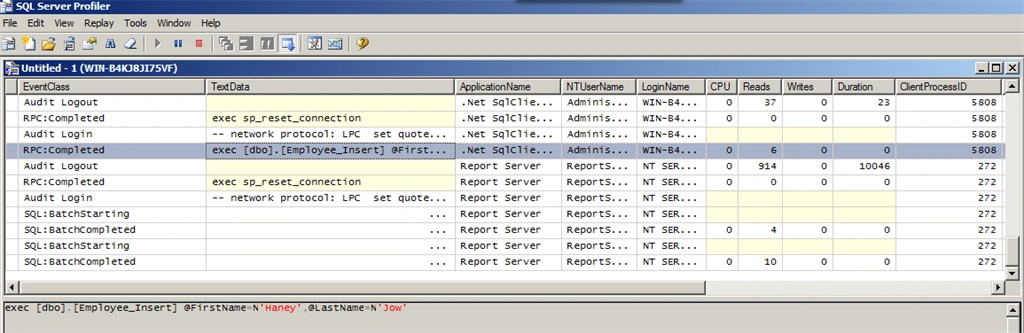
SQL profiler
Summary
In this article we saw how to access a SQL Server database with Entity Framework Code First Approach using data and how to create a procedure using the Fluent API. Happy coding!
Sonu ChaudharyPosted May 26, 2016, 10:47 AM
Good one...
NitinPosted May 14, 2015, 12:47 PM
nice
Santhakumar MunuswamyPosted May 14, 2015, 1:11 AM
good work