

Introduction
In this article, we describe a very popular or common feature of any software installation. I think all of you have seen progress bars. Now we are describing how we can make your own progress bars. A Progress Bar is a component used to show the status of the application; how much time is to complete the task of the application.
Sometimes a task running within a program might take a while to complete. A user-friendly program provides some indication to the user that the task is occurring, how long the task might take, and how much work has already been done. One way of indicating work, and perhaps the amount of progress, is to use an animated image.
Creating progress bar in Java
Step 1: Importing a necessary package.
- import java.util.*;
- import java.awt.*;
- import java.awt.event.*;
- import javax.swing.*;
- import javax.swing.event.*;
- JProgressBar prbr;
- JButton b;
- JLabel l;
- JPanel P;
- public MyProgressBar()
- {
- // creating a panel p
- P = new JPanel();
- // set the size of panel
- P.setPreferredSize(new Dimension(400, 400));
- //add to thye conentpane
- getContentPane().add(P);
- // Create a label and progress bar
- l = new JLabel("Waiting for your click...");
- // set the size of label
- l.setPreferredSize(new Dimension(380, 45));
- //add to thye conent panel
- P.add(l);
- // create the progress bar
- prbr = new JProgressBar();
- // set the size of progress bar
- prbr.setPreferredSize(new Dimension(300, 20));
- //set minimum value for starting the progress bar
- prbr.setMinimum(0);
- //set maximum value for end point of the progress bar
- prbr.setMaximum(1000);
- // set the value at starting is 0
- prbr.setValue(0);
- // set bounds means location in panel
- prbr.setBounds(30, 50, 360, 30);
- //now add in pannel
- P.add(prbr);
- //creating button with name 'go'
- b = new JButton("Go");
- P.add(b);
- b.addActionListener(this);
- setTitle("MY Progress Bar ready");
- setSize(400, 400);
- setBackground(Color.Green);
- setDefaultCloseOperation(JFrame.EXIT_ON_CLOSE);
- }
- public void actionPerformed(ActionEvent event)
- {
- if (event.getSource() == b)
- {
- // Prevent more button presses
- b.setEnabled(false);
- // Perform all of our bogus tasks
- for (int iCtr = 1; iCtr < 1001; iCtr++)
- {
- // Do some sort of simulated task
- DoTask(iCtr);
- // Update the progress indicator and label
- l.setText("Performing task " + iCtr + " of 1000");
- Rectangle labelRect = l.getBounds();
- labelRect.x = 0;
- labelRect.y = 0;
- l.paintImmediately(labelRect);
- prbr.setValue(iCtr);
- Rectangle progressRect = prbr.getBounds();
- progressRect.x = 0;
- progressRect.y = 0;
- prbr.paintImmediately(progressRect);
- }
- }
- }
- public void DoTask(int iCtr)
- {
- Random random = new Random(iCtr);
- // Waste some time
- for (int iValue = 0; iValue < random.nextFloat() * 1000; iValue++)
- {
- System.out.println("Value=" + iValue);
- }
- }
- public static void main(String args[])
- {
- // Create an instance of the test application
- MyProgressBar mF = new MyProgressBar();
- mF.setVisible(true);
- mF.pack();
- }
- import java.util.*;
- import java.awt.*;
- import java.awt.event.*;
- import javax.swing.*;
- import javax.swing.event.*;
- class MyProgressBar extends JFrame implements ActionListener
- {
- JProgressBar prbr;
- JButton b;
- JLabel l;
- JPanel P;
- public MyProgressBar()
- {
- setTitle("MY Progress Bar ready");
- setSize(400, 400);
- setBackground(Color.green);
- P = new JPanel();
- P.setPreferredSize(new Dimension(400, 400));
- getContentPane().add(P);
- // Create a label and progress bar
- l = new JLabel("Waiting to start tasks...");
- l.setPreferredSize(new Dimension(380, 45));
- P.add(l);
- prbr = new JProgressBar();
- prbr.setPreferredSize(new Dimension(300, 20));
- prbr.setMinimum(0);
- prbr.setMaximum(1000);
- prbr.setValue(0);
- prbr.setBounds(30, 50, 360, 30);
- P.add(prbr);
- b = new JButton("Go");
- P.add(b);
- b.addActionListener(this);
- }
- public void actionPerformed(ActionEvent event)
- {
- if (event.getSource() == b)
- {
- // Prevent more button presses
- b.setEnabled(false);
- // Perform all of our bogus tasks
- for (int iCtr = 1; iCtr < 1001; iCtr++)
- {
- // Do some sort of simulated task
- DoBogusTask(iCtr);
- // Update the progress indicator and label
- l.setText("Performing task " + iCtr + " of 1000");
- Rectangle labelRect = l.getBounds();
- labelRect.x = 0;
- labelRect.y = 0;
- l.paintImmediately(labelRect);
- prbr.setValue(iCtr);
- Rectangle progressRect = prbr.getBounds();
- progressRect.x = 0;
- progressRect.y = 0;
- prbr.paintImmediately(progressRect);
- }
- }
- }
- public void DoBogusTask(int iCtr)
- {
- Random random = new Random(iCtr);
- // Waste some time
- for (int iValue = 0; iValue < random.nextFloat() * 1000; iValue++)
- {
- System.out.println("iValue=" + iValue);
- }
- }
- public static void main(String args[])
- {
- // Create an instance of the test application
- MyProgressBar mF = new MyProgressBar();
- mF.setVisible(true);
- mF.pack();
- }
- }
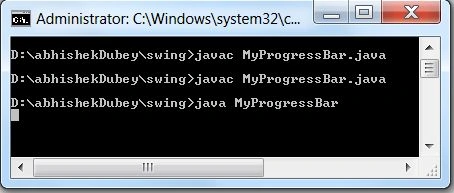
Cmd output
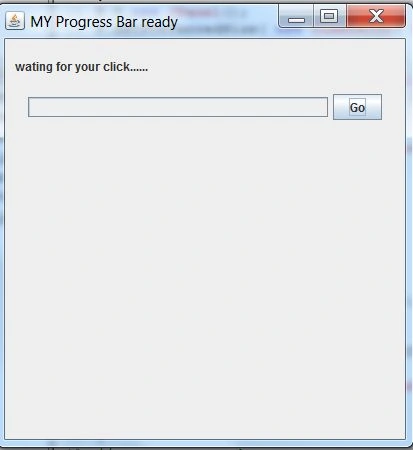
The initial output of the frame with progress bar.
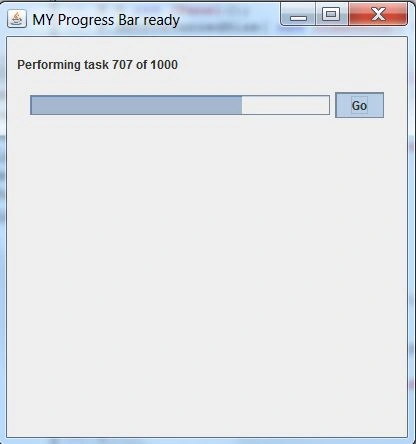
After clicking on the go button:
Resources
Join the conversation! Your thoughts help the community grow.