Introduction
This article explains ActionBar Navigation in Android.
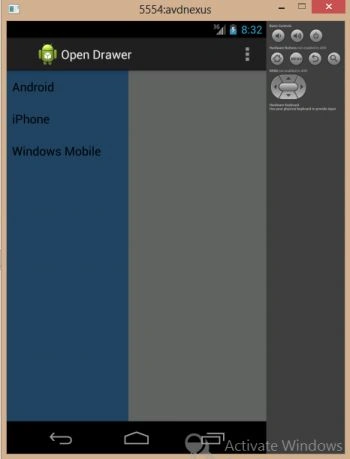
A Navigation Drawer is a panel consisting of content that you want to show when the Navigation Drawer is opened. First, it is hidden by default but it can be opened by swiping from left to right or by touching the home icon.
In this, we will use a navigation drawer where we use a ListView that you want to show when the drawer is opened. So you need to open the navigation drawer on the home icon click. On opening, the navigation drawer list view will be displayed that contains several items. Set an item's click listener so that when an item of the list view is clicked it will do an exchange of fragments. So you will create an XML file that contains the TextView.
Step 1
Create an XML file and write the following.
This XML file contains a ListView and FrameLayout that will use the fragments at runtime.
- <android.support.v4.widget.DrawerLayout
- xmlns:android="http://schemas.android.com/apk/res/android"
- android:id="@+id/drawer_layout"
- android:layout_width="match_parent"
- android:layout_height="match_parent">
-
- <FrameLayout
- android:id="@+id/content_frame"
- android:layout_width="match_parent"
- android:layout_height="match_parent" />
-
-
- <ListView android:id="@+id/left_drawer"
- android:layout_width="180dp"
- android:layout_height="match_parent"
- android:layout_gravity="start"
- android:choiceMode="singleChoice"
- android:divider="@android:color/transparent"
- android:dividerHeight="0dp"
- android:background="#111"/>
- </android.support.v4.widget.DrawerLayout>
Step 2
Create another XML file and write this:
- <?xml version="1.0" encoding="utf-8"?>
- <LinearLayout xmlns:android="http://schemas.android.com/apk/res/android
- android:layout_width="match_parent"
- android:layout_height="match_parent"
- android:orientation="vertical" >
- <TextView
- android:id="@+id/textView1"
- android:layout_width="wrap_content"
- android:layout_height="match_parent"
- android:text="Placeholder Text"
- android:layout_gravity="center"
- android:textAppearance="?android:attr/textAppearanceLarge" />
-
- </LinearLayout>
Step 3
Create a Java class file and write this:
- package com.myactionbarnavigation;
- import android.annotation.TargetApi;
- import android.app.ActionBar;
- import android.app.Activity;
- import android.app.Fragment;
- import android.app.FragmentManager;
- import android.content.res.Configuration;
- import android.os.Build;
- import android.os.Bundle;
- import android.support.v4.app.ActionBarDrawerToggle;
- import android.support.v4.widget.DrawerLayout;
- import android.view.Menu;
- import android.view.MenuItem;
- import android.view.View;
- import android.widget.AdapterView;
- import android.widget.ArrayAdapter;
- import android.widget.ListView;
- import android.widget.Toast;
-
- public class MainActivity extends Activity {
- private String[] Titles;
- private DrawerLayout Drawer;
- private ListView List;
- private ActionBarDrawerToggle Toggle;
- private CharSequence titles;
-
- @TargetApi(Build.VERSION_CODES.ICE_CREAM_SANDWICH)
- @Override
- public void onCreate(Bundle savedInstanceState) {
- super.onCreate(savedInstanceState);
- setContentView(R.layout.activity_main);
- ActionBar Bar = getActionBar();
-
-
-
-
- titles = getActionBar().getTitle();
- Titles = getResources().getStringArray(R.array.operating_systems);
- System.out.println(Titles.length);
- Drawer = (DrawerLayout) findViewById(R.id.drawer_layout);
- List = (ListView) findViewById(R.id.left_drawer);
-
- List.setAdapter(new ArrayAdapter<String>(this,
- android.R.layout.simple_list_item_1,android.R.id.text1, Titles));
-
-
- List.setOnItemClickListener(new DrawerItemClickListener());
- Drawer = (DrawerLayout) findViewById(R.id.drawer_layout);
- Toggle = new ActionBarDrawerToggle(this,
- Drawer,
- R.drawable.image,
- R.string.drawer_open,
- R.string.drawer_close ) {
-
- public void onDrawerClosed(View v) {
- getActionBar().setTitle(titles);
- }
-
- public void onDrawerOpened(View drawerview) {
- getActionBar().setTitle("Open Drawer");
- }
- };
-
- Drawer.setDrawerListener(Toggle);
- getActionBar().setDisplayHomeAsUpEnabled(true);
- getActionBar().setHomeButtonEnabled(true);
- }
- private class DrawerItemClickListener implements ListView.OnItemClickListener {
- @Override
- public void onItemClick(AdapterView parent, View v, int i, long id) {
- selectItem(i);
- }
- }
- @Override
- protected void onPostCreate(Bundle savedInstanceState) {
- super.onPostCreate(savedInstanceState);
-
- Toggle.syncState();
- }
- @Override
- public void onConfigurationChanged(Configuration Config) {
- super.onConfigurationChanged(Config);
- Toggle.onConfigurationChanged(Config);
- }
- @Override
- public boolean onCreateOptionsMenu(Menu menu) {
- getMenuInflater().inflate(R.menu.main, menu);
- return super.onCreateOptionsMenu(menu);
- }
- @Override
- public boolean onOptionsItemSelected(MenuItem Item) {
-
-
- if (Toggle.onOptionsItemSelected(Item)) {
- return true;
- }
-
- switch (Item.getItemId()) {
- case R.id.action_settings:
- Toast.makeText(this, "Settings selected", Toast.LENGTH_LONG).show();
- break;
- default:
- break;
- }
- return super.onOptionsItemSelected(Item);
- }
-
- @TargetApi(Build.VERSION_CODES.HONEYCOMB)
- private void selectItem(int i) {
-
- Fragment fragment = new Second();
- Bundle args = new Bundle();
- args.putInt(Second.ARG, i);
- fragment.setArguments(args);
-
- FragmentManager fragmentManager = getFragmentManager();
- fragmentManager.beginTransaction().replace(R.id.framelayout, fragment).commit() ;
-
-
- List.setItemChecked(i, true);
- getActionBar().setTitle((Titles[i]));
- Drawer.closeDrawer(List);
-
- }
-
- }
Step 4
Create a Java class file and write this:
- package com.myactionbarnavigation;
- import android.annotation.TargetApi;
- import android.app.Fragment;
- import android.os.Build;
- import android.os.Bundle;
- import android.view.LayoutInflater;
- import android.view.View;
- import android.view.ViewGroup;
- import android.widget.TextView;
-
- @TargetApi(Build.VERSION_CODES.HONEYCOMB)
-
- public class Second extends Fragment {
- public static final String ARG= "O";
- private String string;
- @Override
- public View onCreateView(LayoutInflater i, ViewGroup c,
- Bundle savedInstanceState) {
- View view = i.inflate(R.layout.second, null);
- TextView textView = (TextView) view.findViewById(R.id.textView1);
- textView.setText(string);
- return view;
- }
- @TargetApi(Build.VERSION_CODES.HONEYCOMB)
- @Override
- public void onActivityCreated(Bundle savedInstanceState) {
- super.onActivityCreated(savedInstanceState);
- }
-
- @Override
- public void setArguments(Bundle a) {
- string = a.getString(ARG);
- }
- }
Step 5
Write this inside the String.Xml file:
- <?xml version="1.0" encoding="utf-8"?>
- <resources>
- <string name="app_name"></string>
- <string name="action_settings">Settings</string>
- <string name="action_update">Update</string>
- <string name="drawer_open">Open Drawer</string>
- <string name="drawer_close">Close Drawer</string>
- <string name="hello_world">Hello world!</string>
- <string-array name="operating_systems">
- <item >Android</item>
- <item >iPhone</item>
- <item >Windows Mobile</item>
- </string-array>
- </resources>
Step 6
Step 7
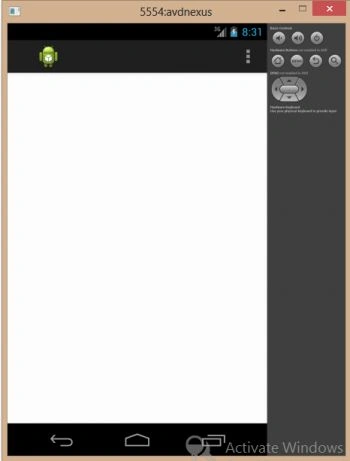
When you click on the home icon:

Join the conversation! Your thoughts help the community grow.