

Introduction
Today I am writing about new the semantics and input elements of HTML5. Before looking into new elements let's first look into an overview and the need for HTML5.
Overview of HTML5
- HTML5 is a new standard for HTML. It's the output of joint efforts from the World Wide Web Consortium (W3C) and the Web Hypertext Application Technology Working Group (WHATWG).
- The previous version of HTML is HTML 4.01 that came in 1999.
- The major browsers support many of the new HTML5 elements and APIs.
Why we need HTML5
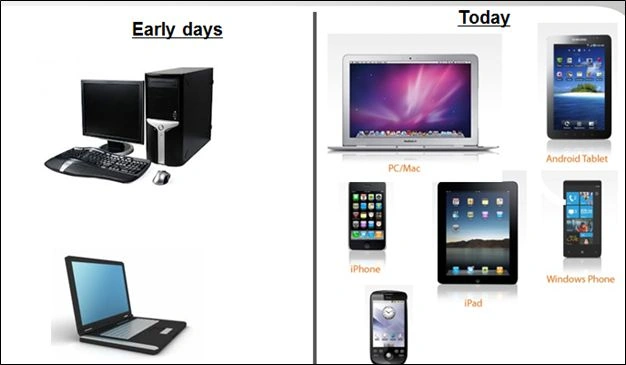
- It introduces more efficient markup to eliminate the use of external plugins like Adobe Flash Player.
- HTML5 also reduces the use of scripting languages and it’s more SEO friendly.
- It is device independent and is supported by the latest versions of all major web browsers.
New semantic\structural elements in HTMLS:
- <article>
- <aside>
- <header>
- <footer>
- <section>
- <nav>
- <summary>
- <figure>
- <figcaption>
New input elements of HTML5:
- <input type = “color” />
- <input type = “date” />
- <input type = “datetime” />
- <input type = “datetime-local” />
- <input type = “email” />
- <input type = “month” />
- <input type = “number” />
- <input type = “range” />
- <input type = “search” />
- <input type = “tel” />
- <input type = “time” />
- <input type = “url” />
- <input type = “week” />
Conclusion
In this article,we studied new semantics and input elemenets in html5
Sam HobbsPosted Feb 12, 2015, 9:29 PM
There were many more operating systems in the past than most young developers are aware of. Whereas Microsoft has developed a couple of them (with variations), other companies, such as IBM, has developed very many.